InnerMovement Wellness Center

Back pain & sciatica treatment in Glendale

Back pain is the reason most people first walk through our door. Whether it’s a dull ache that’s been building for years or sharp nerve pain shooting down your leg, the approach starts the same way: understanding what’s actually happening before treating it.

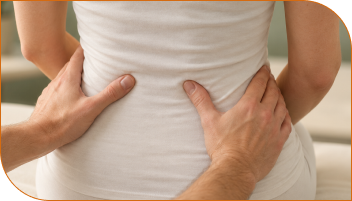
examining back

What’s causing your pain?

Disc Issues and Nerve Compression

Pain that travels into the buttock or leg, sometimes with numbness or tingling.

Muscle Strain & Spasm

A sudden catch after lifting or twisting, often with tightness that won’t release.

Posture & Prolonged Sitting

Aching that builds through the workday and eases when you move around.

Sacroiliac Joint Dysfunction

One-sided pain low in the back or across the hip, worse on stairs or standing up.

Arthritis & Degenerative Change

Stiffness that’s worst in the morning and loosens somewhat as the day goes on.

Work or Auto Injury

Pain that started with a specific incident — a lift, a fall, or a collision.

What is sciatica?

Sciatica describes pain traveling along the sciatic nerve — typically from the lower back through the buttock and down one leg. It’s a symptom rather than a diagnosis, which is why identifying the source matters more than naming it.

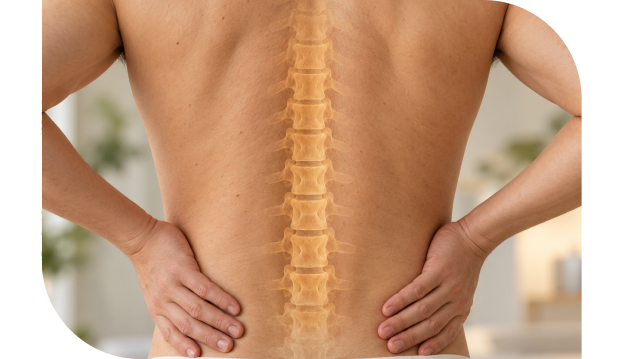
back pain

If you’ve been diagnosed

Herniated & Bulging Discs

Discs sit between your vertebrae as cushioning. When one bulges or herniates, the material can press on nearby nerves — which is why a disc problem in your back often shows up as pain, numbness, or weakness in your leg.

Not every herniated disc causes symptoms, and not every one requires surgery. Our approach focuses on reducing pressure on the affected nerve and addressing the movement patterns that aggravate it.

Spinal Stenosis

Spinal stenosis is a narrowing of the spaces within the spine, which can compress the nerves running through it. It’s more common with age, and the hallmark pattern is pain or heaviness in the legs that eases when you sit or lean forward.

Care focuses on maintaining mobility, managing symptoms, and reducing the compensations that make it harder to stay active.

How We Can Treat Your Pain

Chiropractic Care

Restoring movement and reducing pressure on irritated nerves.

Learn more →

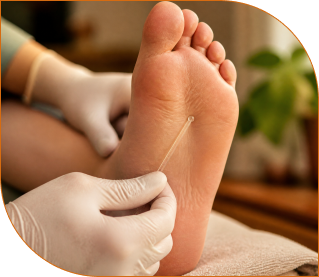
Acupuncture

Pain management as part of your treatment plan

Learn more →

Soft Tissue Therapy

Releasing the muscle patterns that keep the problem coming back.

Learn more →

Cupping

Suction-based work for chronically tight lower back tissue.

Learn more →

Custom Orthotics

When gait or foot mechanics are loading your back unevenly.

Learn more →

Specialized Urgent Care

Same-day relief for acute flare-ups, including muscle relaxants.

Learn more →

Frequently Asked Questions

Does Medicare cover acupuncture for back pain?

Medicare Part B covers acupuncture for chronic low back pain, defined as pain lasting 12 weeks or longer with no identifiable cause, not connected to surgery or pregnancy. 

We’re one of the few local practices accepting Medicare for acupuncture. Call (818) 549-1300 and we’ll verify your eligibility before your first visit.

Can a chiropractor help with sciatica?

Often, yes — depending on what’s causing it. Sciatica is a symptom rather than a diagnosis: it describes pain traveling along the sciatic nerve, but the source might be a disc, joint restriction, muscle compression, or something else. Chiropractic care can address several of those, particularly where joint mechanics or nerve pressure are involved. Our evaluation identifies the source first, and if chiropractic isn’t the right tool, we’ll say so.

How long does sciatica take to resolve?

It varies considerably. Many cases improve over several weeks, some resolve faster, and some are more persistent — it depends on the cause, how long you’ve had it, and your overall health. We’ll give you a realistic sense of the timeline after evaluating you, and if progress stalls, we’d rather reassess the approach than keep repeating something that isn’t working.

When should I be concerned about back pain?

Seek immediate medical attention for back pain with loss of bladder or bowel control, progressive weakness or numbness in the legs, fever alongside back pain, or pain following a significant fall or accident. These can indicate conditions requiring urgent evaluation — call 911 or go to the nearest emergency room.
For back pain that’s persistent, worsening, or interfering with sleep and daily activity, an evaluation is worthwhile even without those warning signs.

Start with an evaluation

Back pain has many possible sources. 

Your first visit sorts out which one you’re dealing with.

doctor