
Acupuncture in Glendale — Medicare Accepted
We’re one of the few practices in the area accepting Medicare for acupuncture. Our licensed acupuncturists treat pain and a range of conditions using traditional Chinese medicine — inside an integrative clinic, so your acupuncturist can coordinate with your chiropractor and nurse practitioner rather than working in isolation.

Does Medicare Cover Acupuncture?
Coverage runs up to 12 sessions in 90 days, with 8 additional sessions if you’re showing improvement — a maximum of 20 per year. You’ll pay 20% coinsurance after meeting your Part B deductible.
Acupuncture for other conditions — knee pain, neck pain, shoulder pain, headaches — is not covered by Medicare Part B. Some Medicare Advantage plans include broader acupuncture benefits as a supplemental extra, and those vary by plan.
Call (818) 549-1300 and we’ll verify exactly what your plan covers before your first visit.
Acupuncture Service Hours
Monday through Friday: 9:00 am – 6:00 pm
What We Treat
Back Pain & Sciatica
Neck Pain & Headaches
Knee & Joint Pain
Shoulder Pain
Muscle Pain
Stress, Sleep, Digestive
Your First Visit
If you’ve never had acupuncture, the unknown is usually the hardest part. Here’s exactly what happens.
1. Thorough History Intake
Your acupuncturist takes a full history — not just where it hurts, but sleep, digestion, stress, and energy, since traditional Chinese medicine reads these as connected. Bring any questions you’ve written down, and note any symptoms you’re having that day.
2. Examination and diagnosis
A physical examination, plus diagnostic tools specific to Chinese medicine — including tongue and pulse assessment.
3. Your Treatment Plan
Your acupuncturist develops a prescription unique to you rather than a standard protocol. That’s discussed with you before anything begins.
4. Treatment
Usually the same visit. Initial visits run 30 to 60 minutes depending on how complex your situation is. Follow-ups are typically 30 to 45 minutes.
What the Treatment Itself Is Like

Getting Set Up
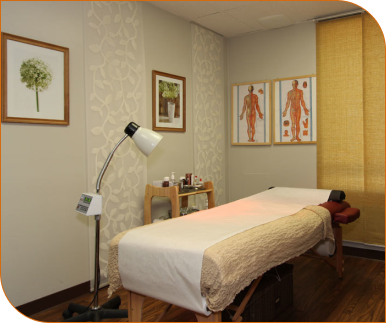
You’ll lie on the treatment table, and the skin is cleaned with an alcohol swab before needling. All needles are sterile and single-use.
Your acupuncturist places needles at specific points based on your symptoms.

What You Feel
Most people feel very little on insertion — what you may notice is a sensation of heaviness at the point, and occasionally a brief tingling that travels a short distance. Both are normal and generally described as odd rather than painful.

Resting
Needles stay in for roughly 15 to 30 minutes while you rest. Many people find this part relaxing enough to doze off. At the end, each needle is removed and the point is briefly compressed with a sterile cotton swab.
Depending on what you’re being treated for, your session may also include moxibustion — warming specific points — or acupressure.
How to Prepare
• Wear loose, comfortable clothing so points are easy to reach
• Don’t eat a large meal right before or right after your visit
• Skip strenuous exercise, alcohol, and recreational drugs for about six hours afterward
• Write down your questions and note any symptoms you’re having that day
• Complete your acupuncture intake form beforehand: View Form Here
Cupping
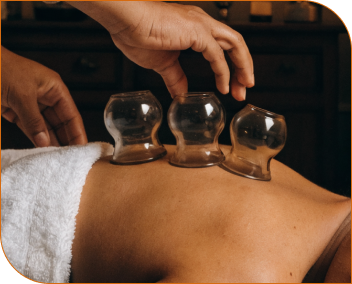
Cupping uses suction to lift and separate tissue, increasing circulation to areas that are tight or restricted. It’s often done in the same visit as acupuncture and is most commonly used for back and shoulder tension.
Cupping leaves temporary circular marks — usually pink to dark red — which fade over several days. They aren’t bruises in the usual sense and aren’t painful, but it’s worth knowing before a session if you have an event coming up.
Our Acupuncturists
Veronica Sanchez, FNP-BC, MSN, BSN, CCM, LAc
Dually licensed as a Nurse Practitioner and acupuncturist, Veronica combines acupuncture with joint injections, cupping, and gua sha — and can prescribe when that’s what’s needed.

Jessica Min, LAc
A former meditation teacher and Qi-gong professor, Jessica pairs Oriental and Western medicine for musculoskeletal pain and hormonal balance.


$185 New Patient Special
$185 Acupuncture New Patient Special includes the following:
• FREE 30 Min Cupping Treatment
• Acupuncture Exam, Acupuncture Treatment, Herbal Prescription
Call to book: (818) 549-1300

Frequently Asked Questions
Most people find it far less noticeable than they expect. Acupuncture needles are extremely thin — closer to a hair than to a hypodermic needle — and many people don’t feel insertion at all. What you may notice is a dull heaviness or warmth around the point, which is normal.
If anything is uncomfortable, tell your acupuncturist and they’ll adjust. Most people find sessions relaxing enough that they doze off.
Coverage is up to 12 sessions in 90 days, with 8 more if you’re improving, capped at 20 per year. You pay 20% coinsurance after your Part B deductible.
Acupuncture for other conditions isn’t covered under Part B, though some Medicare Advantage plans offer broader benefits. Call us and we’ll check your specific plan.
It varies with the condition and how long you’ve had it. Acute problems sometimes respond within a few sessions; long-standing ones typically need a longer course. Acupuncture also tends to be cumulative — the effect builds across sessions rather than arriving all at once.
We’ll give you a realistic estimate after your first visit and reassess as we go. If it isn’t helping, we’d rather tell you than keep booking you.
Both use thin needles, but they come from different traditions. Acupuncture is rooted in traditional Chinese medicine and works from a whole-system diagnosis. Dry needling is a Western technique targeting muscular trigger points specifically.
Licensing also differs — acupuncturists complete a multi-year graduate program and hold a state license (LAc), while dry needling is typically performed by other provider types with shorter training. Our practitioners are licensed acupuncturists.
Yes, and many patients do. They address different things — chiropractic works on joint mechanics and alignment, acupuncture on pain and the surrounding tension. Because both happen here, your practitioners can coordinate rather than duplicating effort. Ask about scheduling them on the same day.
Often Combined With
Disclaimer
Tell us before your visit if you have the following: are pregnant or think you may be, take blood thinners or have a bleeding disorder, have a pacemaker or other implanted electrical device, have a compromised immune system, have a skin infection or open wound at the treatment site, are receiving cancer treatment. These don’t necessarily rule out care — they change how we approach it.
Book Your First Visit
New patients: please call so we can match you with the right acupuncturist. On Medicare? We’ll verify your coverage before you come in.