Muscle Pain & Tension Treatment in Glendale
Muscle pain that won’t let go is rarely just a muscle problem. Tight tissue is often compensating for something else — a joint that isn’t moving well, a posture your job demands, or stress your body is holding onto. We look for that underlying pattern rather than just working on the sore spot.
What’s causing your pain?
Chronic Muscle Tension
Persistent tightness that doesn’t release with stretching or rest.
Trigger Points and Knots
Localized areas of hypersensitivity that refer pain to other parts of the body.
Muscle Spasms
Involuntary contractions that can be painful and disruptive.
Myofascial pain
Pain originating from fascia, the connective tissue surrounding muscles.
Post-Workout Soreness
Delayed onset muscle soreness (DOMS) that lingers beyond normal recovery.
Stress and Work Tension
Neck, shoulder, and low back tightness from sedentary work or emotional/mental stress.
Your Muscle Pain May Not Start Where It Hurts
The nerves that supply your shoulder, arm, and upper back originate in your neck. When those nerves are irritated where they exit the cervical spine, the pain frequently registers in the muscles of the upper back, shoulder blades, or arms—well away from where the actual problem is.
This is why some muscle tension doesn’t respond to treatment focused solely on the sore spot. If your tension travels down your arm, comes with tingling or numbness, or changes when you turn your head, the neck is worth examining. Our evaluation checks both the affected muscles and the structures that may be driving them.
How We Can Treat Your Pain
Soft Tissue Therapy
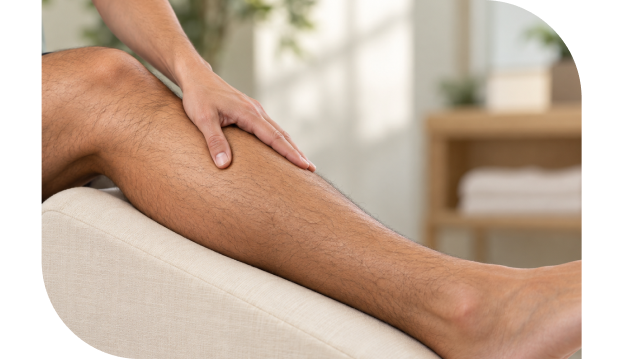
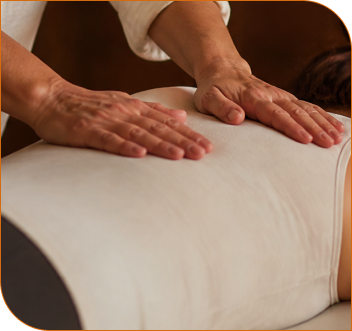
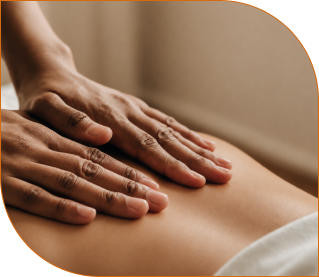
Myofascial release, trigger point work, and therapeutic massage to release tight tissue and improve blood flow.
Learn more →
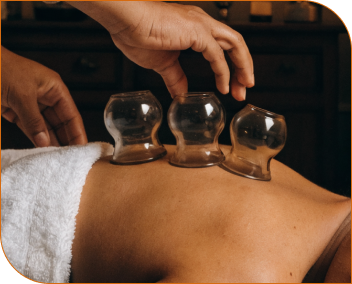
Cupping
Suction-based therapy that lifts and separates restricted tissue, promoting circulation and releasing fascia.
Learn more →
Chiropractic Care
Addressing joint restrictions in the spine and extremities that make muscles compensate.
Learn more →
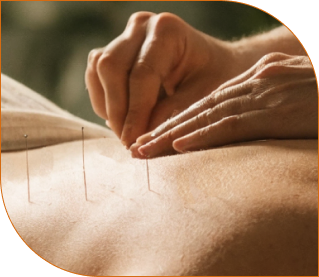
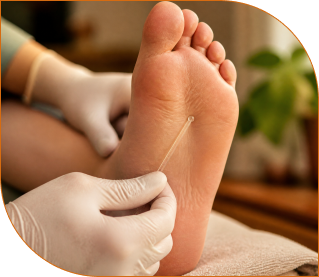
Acupuncture
Reducing pain and releasing tension patterns through targeted needle placement along energy meridians.
Learn more →
Integrative Urgent Care
For acute spasms needing immediate relief, including muscle relaxants when appropriate.
Learn more →
Custom Orthotics
Addressing foot and gait issues that can create tension patterns throughout the body.
Learn more →
Frequently Asked Questions
Mild, short-lived soreness often does resolve on its own. But pain that lingers past a few days, keeps recurring, or limits your movement is worth having evaluated — untreated muscle tension can lead to compensation patterns that create pain elsewhere in the body.
Common causes include poor posture, repetitive strain, stress-related tension, old injuries that never fully healed, and misalignment that puts uneven load on certain muscle groups. A proper evaluation helps identify which of these (often more than one) is driving your specific pain.
Depending on what’s driving it, treatment may include chiropractic adjustments to address underlying alignment issues, therapeutic massage to release tension and improve circulation, and acupuncture to reduce pain and support the body’s natural healing response. Your plan is built around your specific pain pattern, not a one-size-fits-all protocol.
This varies by person and by how long the pain has been present. Some patients feel meaningful relief within a few visits; others with longer-standing tension need a more extended plan. We’ll walk you through expected timeline at your initial evaluation.
Yes — we accept Medicare, Anthem Blue Cross PPO, workers’ comp injuries, personal injury cases, FSA/HSA, and cash pay. (We do not accept Medi-Cal.)
It depends on the cause. Massage is especially effective for tension and circulation-related pain; chiropractic care is often the better fit when alignment or joint mechanics are contributing. Many patients benefit from a combination of both, which we can determine at your first visit.
Related Conditions
Start With an Evaluation
Muscle tension has a lot of possible sources, and the right treatment depends entirely on which one you’re dealing with. We’ll check the muscles, the joints nearby, and any structures that may be driving the tension before recommending anything.